If your hair loss treatments aren’t working, the real issue may be an incorrect diagnosis.
You’ve tried onion oils, biotin gummies, and caffeine shampoos without success. Remember, you might be caught in the Treatment Trap. Cosmetic products can’t fix a deeper biological problem. It’s similar to painting over a cracked engine block instead of repairing it.
Hair loss is rarely caused by a single disease. It’s often a sign of internal issues, such as stress, poor nutrition, or environmental toxins. Instead of another serum, you need a Trichologist.
The Snapshot
What is a Trichologist? They are specialists who focus only on treating hair and scalp problems using scientific methods.
The Difference: Dermatologists treat skin diseases, while Trichologists focus on lifestyle, nutrition, and the health of your hair follicles.
The Local Reality: In Hyderabad, a Trichologist is especially important given unique challenges such as hard borewell water and stress from IT jobs.
What Does a Trichologist Actually Do?
What is a Trichologist?
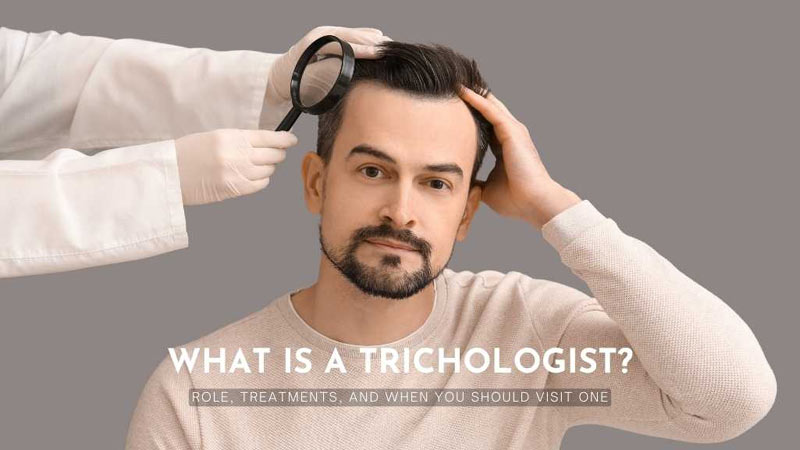
A Trichologist is a specialist in the science of human hair and scalp health (Trichology). Unlike general doctors who focus on diseases, a Trichologist acts like a forensic auditor. They look for the root causes of hair thinning, shedding, and scalp problems to improve the environment for hair growth.
While doctors may prescribe medication, a Trichologist creates a complete regrowth plan that covers nutrition, scalp care, and lifestyle changes.
The “Forensic Audit” Methodology
To address ongoing hair thinning, they look at your whole lifestyle, not just your scalp. The focus on three key areas:
- Scalp Ecology: The Trichologist will check your scalp’s oil production, pH balance, and microbiome. If your scalp is inflamed or blocked, even the best growth serums won’t reach your hair follicles.
- Nutritional Status: The doctor looks for hidden deficiencies, such as low Ferritin (stored iron) or Vitamin B12. Source) These shortages can stop hair growth even if you don’t feel unwell.
- Environmental Trauma: The specialist checks for damage from heat styling, chemical treatments, and, in our area, water quality.
- Trichologist vs. Dermatologist: The “Power Couple” Approach
Many people think they have to choose between a Trichologist and a Dermatologist, but the best results come from combining both experts.
Think of the Dermatologist as a firefighter. Their job is to treat urgent skin conditions such as Alopecia Areata, scarring alopecias, and autoimmune conditions.
The Trichologist is like an architect. After the urgent issues are managed, or if there weren’t any, they help rebuild and support long-term hair regrowth and scalp care.
Who should you see?
| If your symptom is… |
You need a Dermatologist |
You need a Trichologist |
| Sudden, patchy hair loss (Alopecia Areata) |
Primary Choice |
❌ |
| Chronic thinning, shedding, or volume loss |
❌ |
Primary Choice |
| Scalp pain, bleeding, or scarring |
Primary Choice |
❌ |
| Dandruff, Itching, Oily Scalp |
For medication |
(For management) |
| Diet & Lifestyle Review for Hair Health |
❌ |
Primary Choice |
If you live in Hyderabad, advice from US-based blogs may not work for you. Local environmental factors mean you need a Trichologist who understands your specific situation.
1. The Water Factor (Manjeera vs. Borewell)
Hyderabad’s groundwater has high levels of Total Dissolved Solids (TDS). (Source) If you use borewell or tanker water, you’re washing your hair with water rich in calcium and magnesium. This can cause mineral buildup that blocks your hair follicles.
The Fix: Expensive shampoos won’t solve this problem. Chelation therapy is needed to remove the mineral buildup.
2. The “Hitech City Syndrome”
Let’s see a specific profile in IT professionals working in Gachibowli and Madhapur:
- High Cortisol: Night shifts and deadlines spike stress hormones, pushing hair into the resting phase (Telogen Effluvium).
- AC Dehydration: Spending long hours in air-conditioned offices dries out your scalp, which can cause it to produce extra oil to protect itself.
- Dietary Gaps: Eating mostly canteen food can lead to insulin resistance, which is strongly linked to hair loss in women with PCOS.
The 60-Minute Consultation: What to Expect
When you book a trichology consultation, you’re setting aside time to find answers. The doctor looks past just blaming genetics to find the real reasons for your hair thinning.
Step 1: The Digital Trichoscopy
Trichologists use a dermoscope, which magnifies your scalp up to 200 times, to see details that aren’t visible to the naked eye:
- Follicle Density: Are you losing hair, or just hair thickness?
- Miniaturisation: Are your hairs shrinking in diameter before they fall out?
- Perifollicular Inflammation: Is there invisible redness around the root choking the hair?
Step 2: The History & Pull Test
The specialist reviews your hair history. For example, did you have a fever three months ago? (Hair shedding after illness is common.) They also perform a pull test to determine whether your hair is shedding or breaking.
Treatments: Bridging Ayurveda, Science, and Economics
Effective treatment isn’t about picking Nature or Science. It’s about using the best method to deliver results.
GFC: The Modern Evolution of PRP. You might know about PRP (Platelet-Rich Plasma), but the doctor often suggests GFC (Growth Factor Concentrate) instead.
Why GFC? It takes specific growth factors from your blood and leaves out red blood cells. This usually means a higher concentration and less inflammation than regular PRP, which is better for sensitive Indian hair.
The Ayurveda-Science Bridge
Ingredients like Bhringaraj and Amla have scientific support. But putting raw oil on a scalp with mineral buildup won’t help. Nanotechnology is used to get these ingredients deeper into your skin than traditional methods can.
Safety First: How to Spot a “Fake” Trichologist
Recently, many hair clinics in Hyderabad have started offering free check-ups. Often, these are just ways to sell expensive packages, regardless of your condition.
The Credibility Checklist
- Check Certifications: Look for credentials from recognised bodies like the IAT (International Association of Trichologists) or USTI.
- Be careful with promises of a guarantee: Biology is unpredictable, and a trustworthy professional will never promise 1If a clinic tries to sell you a six-month prepaid package in the first five minutes without even doing a microscopic exam, it’s best to leave.
FAQ: Common Questions About Trichology
Is a Trichologist a doctor?
Not always. A Trichologist is a para-medical specialist. While some are medical doctors (Dermatologists) who have further specialised, many are certified practitioners focused on holistic hair science. If you require surgery or prescription drugs (like Finasteride), a non-medical Trichologist will refer you to a doctor.
When should I see a Trichologist?
Book a consultation if you notice a lot of hair falling out (over 100 strands a day), your part getting wider, your scalp becoming more visible, or if you have ongoing itching or dandruff that regular shampoos can’t fix.
Can a Trichologist help with male pattern baldness?
Yes. While they can’t change your genetics, Trichologists can help slow hair thinning, improve the health of your current hair, and prepare your scalp for future transplants.
When Trichology Isn’t Enough: Where Hair Transplant Fits In
A trichologist’s role is to protect and revive existing hair follicles. In some cases, follicles are already permanently inactive. When it happens, no oil, supplement, or injection can bring them back. This is where a hair transplant becomes a medical solution.
At Akruti Hair Transplant Centre in Hyderabad, every transplant decision is made only after a detailed scalp and follicle assessment. If your hair loss is still reversible, the focus is on medical and trichological care first. If donor areas are healthy and bald zones are stable, a transplant may be advised as a long-term solution.
If you are unsure where you stand, start with a professional evaluation. The right diagnosis always comes before the right treatment.
Conclusion
You don’t need a miracle cure. You need a thorough assessment.
Hair loss needs quick action. Once a hair follicle dies and skin covers it, only surgery can help. A Trichologist’s goal is to step in while the follicle is still alive but weak.






 Doctors Timetable
 Working Time