Opting for a hair transplant is a life-changing decision. This transformative procedure will not only offer a permanent solution for your hair loss concerns but will also help regain the lost confidence. Hair transplant focuses on restoring natural-looking hair with excellent coverage and density [1]. However, to achieve perfect outcomes, it is essential for you to pay attention to preparation before transplant, follow post-care instructions, and adhere to your surgeon’s guidelines. Having a clear-cut understanding of the hair transplant do’s and don’ts is important to derive optimum results. This write-up offers comprehensive information on essential dos and don’ts related to hair transplant to navigate through the process seamlessly and stay assured of better outcomes.
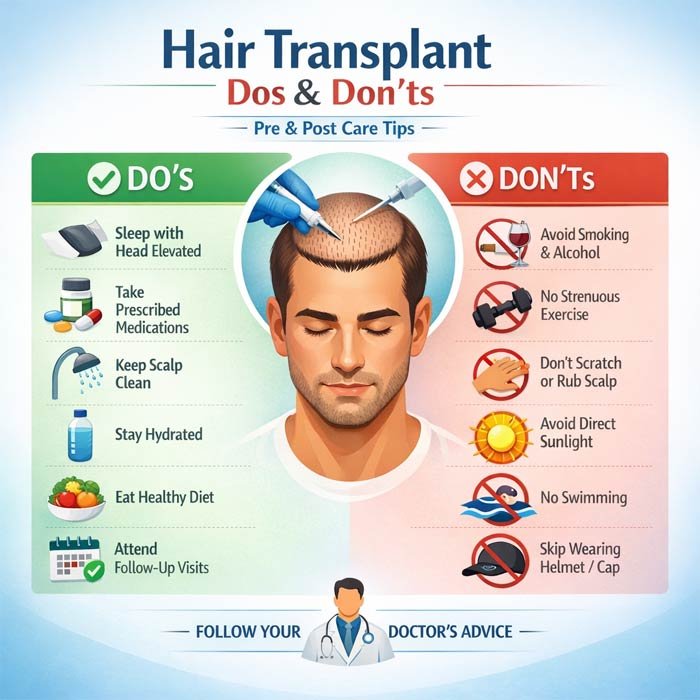
Essential Things to Do Before Your Hair Transplant
1. Consult an Expert Surgeon
The initial step to follow before a hair transplant is choosing an expert and qualified surgeon. You can discuss your eligibility for a hair transplant after the surgeon assesses the extent of hair loss and analyzes your family medical history. You can also clear your doubts regarding various hair transplant techniques like Follicular Unit Transplantation (FUT) or Follicular Unit Extraction (FUE) to find the suitable option that meets your needs.
2. Understand the Difference between the Procedures
Before opting for a specific hair transplant procedure, it’s important to understand the different techniques and the steps involved in it. During the surgeon consultation, you will understand that the Follicular Unit Extraction technique is minimally invasive and has no scarring risks as it is performed by extracting follicles and transplanting them in the scalp’s balding spots. Follicular Unit Transplantation is effective for people who might need more grafts and might leave a noticeable scar [2].
3. Hair Preparation
It is essential to maintain perfect hair care before your hair transplant. Here’s how to prepare your hair:
- Shampoo Wash: Thoroughly wash your hair using shampoo overnight and on the day of your transplant. So, your cleansed scalp will be free from natural oils and dirt, which is essential for the procedure.
- No Styling Products: Avoid the use of hair styling gels, serums, or oils before the transplant session. Such products contain chemicals and will leave residue that might hinder the graft removal process.
- Avoid Shaving, Trimming, or Coloring: Stay away from hair colors, haircuts, and shaving before a hair transplant. Your surgeon will be evaluating and analyzing your hair’s natural state to proceed with the transplant.
4. Stay Healthy
These steps will help you maintain your body in perfect condition before a transplant.
- You must be well-rested before the transplant. Go to bed early and get a good night’s sleep to increase the hair transplant recovery rate after the surgery.
- Your breakfast on the day of a hair transplant must be light and nutritious. Avoid fried and fat-filled foods to prevent discomfort.
- Keep your body hydrated by drinking 8 glasses of water the day before a hair transplant, and drink enough water on the day of the procedure.
- Avoid drinks containing caffeine or alcohol 24 hours before transplant, which might dehydrate your body, affect the recovery time, or interact with anesthesia.
- Do not smoke at least a few weeks before your transplant schedule, as nicotine might shrink your blood vessels and hinder healing time.
5. Medications and Supplements
During the consultation with the surgeon, reveal the complete details of the supplements or medications you take and discuss when to stop them before the transplant. You will be advised to:
- Stay away from blood thinners like ibuprofen and aspirin before the hair transplant procedure.
- Stop taking supplements that contain fish oil and vitamin E.
- Also, inform us if you are allergic to any substances in medicines.
- Discuss whether you can continue the medications that you regularly take for chronic conditions.
6. Optimize Mental Health
Staying mentally prepared is essential before your hair transplant, as stress or anxiety might affect your recovery time. Stay relaxed, engage in activities that you love, and discuss any stress concerns with your surgeon. Be realistic about the transplant outcomes and have a positive outlook about the procedure.
7. Make Necessary Arrangements
Recovery after a hair transplant requires you to be meticulously prepared and plan. Have someone drive the car after the procedure to reach home safely, as the effects of anesthesia might make you drowsy. Visit the clinic along with a family member or friend on the day of the transplant session. Ensure your resting area at home is clean and quiet to get a comfortable sleep. Keep the prescribed pain management medications handy and follow the post-transplant care instructions of your surgeon.
8. Wear Comfortable Clothing
On the day of the hair transplant, wear breathable and loose clothing in button-down style to avoid pulling it up over your head. Avoid tight-fitting clothes with thick fabric to stay comfortable during the procedure.
Important Things to Avoid Before Treatment
- Do not use hair regrowth medications like Finasteride or minoxidil without consulting your surgeon before a hair transplant [3].
- Avoid hitting the gym or performing heavy exercises at home before the procedure, as it might increase blood circulation to the scalp, which is not advisable [4].
- Do not stop the medications that you take for chronic illnesses without seeking your surgeon’s advice.
- Avoid consumption of coffee or energy drinks with caffeine for a few days before the procedure [5].
- Do not color, shave, or cut the hair at the back and side of your head, which are vital donor areas necessary for transplant.
- Do not expect instant hair growth results soon after the transplant. Have patience to witness gradual hair growth in 9 months.
- Do not use vaping products or smoke tobacco, as the nicotine content in them will affect the healing process and graft survival rate [6].
- Stop using herbal teas or pills with herbs like garlic, ginkgo biloba, as they are blood thinners [7].
Post-Transplant Care: What You Must Do
Here’s a list of post-transplant care instructions that can help speed up recovery and deliver the best hair growth outcomes [8].
- Maintain Elevated Position While Sleeping: Place your pillow at a 45-degree elevation for at least 5 days after the hair transplant and sleep on your back.
- Wash Hair with Prescribed Shampoo: After 2 days of transplant, wash the scalp gently with the prescribed special shampoo. Follow your surgeon’s advice regarding hair wash technique, and your scalp must not be directly under the shower.
- Nutritious Food: Ensure that your diet contains a good amount of protein, vitamin E, biotin, and iron. It will help in enhancing your immune system and help in promoting quicker tissue repair.
- Wear a Scalp Protective Cap: After your DHI procedure, your surgeon might advise you to wear a scalp-protecting cap to keep away dirt, dust, and other pollutants. Make sure that the cap fabric doesn’t touch grafts in the transplanted area.
- Hydration Matters: Stay hydrated by drinking 8 cups of water to support the circulation rate and help the fast healing of follicles that were implanted.
- Pain Medications: Follow the instructions of your surgeon about taking medications like anti-inflammatory pills and antibiotics to promote healing, minimize pain, discomfort, and avoid infection.
- Moisturize and Nourish: Maintain a hydrated scalp by applying the prescribed spray or lotion to cut down dryness and scalp irritation while helping in quick scab removal.
- Follow-up Consultations: Do not skip follow-ups with the surgeon after a hair transplant to check the healing process and address concerns quickly.
Common Mistakes to Avoid After a Hair Transplant
Do not engage in heavy physical activities that might induce sweating. Stay away from gym workouts, sauna visits, running, swimming, and cooking. Sweating will irritate the scalp and cause graft infection.
- Stay indoors and avoid direct sun exposure to prevent scalp irritation and slow healing.
- Understanding that scabbing and scalp itching are normal during the healing period. Trying to remove scabs might damage grafts and cause infection or scarring.
- Stay away from smoking and alcohol drinking for a few days after a hair transplant. These products are blood thinners and will interact with medications for pain management.
- Refrain from using hair styling tools and products like straighteners for a month after the transplant procedure. You must also not comb the hair until the transplanted area has fully recovered.
- Avoid taking a dip in swimming pools for at least a month, as the bacteria and chlorine content in the water will cause infection.
- Do not wear tight caps, helmets, or headgear that will affect the graft health.
How Following the Right Care Boosts Your Final Results
The success rate of hair transplant doesn’t begin as soon as you leave the facility. It gets kick-started as soon as you follow the aftercare instructions. Post-transplant care plays a pivotal role in the hair transplant procedure as it ensures better healing, enhances graft survival rate, avoids infections, and enhances recovery. Contact a hair specialist at Akruti hair transplant clinic at Kondapur today to enjoy a smooth recovery process after an advanced hair transplant procedure for optimum hair growth.
Reference Links
- Goldin J, Zito PM, Raggio BS. Hair Transplantation. [Updated 2025 Aug 2]. In: StatPearls [Internet]. Treasure Island (FL): StatPearls Publishing; 2025 Jan-. Available from: https://www.ncbi.nlm.nih.gov/books/NBK547740/ – https://www.ncbi.nlm.nih.gov/books/NBK547740/
- Kumaresan M, Subburathinam DM. Longevity of Hair Follicles after Follicular Unit Transplant Surgery. J Cutan Aesthet Surg. 2020 Oct-Dec;13(4):292-297. doi: 10.4103/JCAS.JCAS_44_20. PMID: 33911409; PMCID: PMC8061642. – https://pmc.ncbi.nlm.nih.gov/articles/PMC8061642/
- Zito PM, Bistas KG, Patel P, et al. Finasteride. [Updated 2024 Feb 28]. In: StatPearls [Internet]. Treasure Island (FL): StatPearls Publishing; 2025 Jan-. Available from: https://www.ncbi.nlm.nih.gov/books/NBK513329/ – https://www.ncbi.nlm.nih.gov/books/NBK513329/
- Smith CJ, Kenney WL, Alexander LM. Regional relation between skin blood flow and sweating to passive heating and local administration of acetylcholine in young, healthy humans. Am J Physiol Regul Integr Comp Physiol. 2013 Apr 1;304(7):R566-73. doi: 10.1152/ajpregu.00514.2012. Epub 2013 Feb 6. PMID: 23389110; PMCID: PMC3627944. – https://pmc.ncbi.nlm.nih.gov/articles/PMC3627944/
- Addicott MA, Yang LL, Peiffer AM, Burnett LR, Burdette JH, Chen MY, Hayasaka S, Kraft RA, Maldjian JA, Laurienti PJ. The effect of daily caffeine use on cerebral blood flow: How much caffeine can we tolerate? Hum Brain Mapp. 2009 Oct;30(10):3102-14. doi: 10.1002/hbm.20732. PMID: 19219847; PMCID: PMC2748160. – https://pmc.ncbi.nlm.nih.gov/articles/PMC2748160/
- Kazunari Usuki, Takuro Kanekura, Kazuhiro Aradono: Department of Dermatology, Kagoshima University Faculty of Medicine, 17-4 Hayasuzu cho, 885 Miyakonojo, Miyazaki, Japan – https://www.sciencedirect.com/science/article/abs/pii/S0923181197000492
- Mai NTQ, Hieu NV, Ngan TT, Van Anh T, Van Linh P, Thu Phuong NT. Impact of Ginkgo biloba drug interactions on bleeding risk and coagulation profiles: A comprehensive analysis. PLoS One. 2025 Apr 8;20(4):e0321804. doi: 10.1371/journal.pone.0321804. PMID: 40198642; PMCID: PMC11991284. – https://pmc.ncbi.nlm.nih.gov/articles/PMC11991284/
- Patwardhan N, Mysore V. Hair transplantation: Standard guidelines of care. Indian J Dermatol Venereol Leprol 2008;74:46-53 – https://ijdvl.com/hair-transplantation-standard-guidelines-of-care/






 Doctors Timetable
 Working Time